

I’ll be honest, for the longest time, I was that person who grabbed whatever bottle was closest when a recipe said: ‘add a cup of red wine.’
It never really crossed my mind that the choice would play the biggest part.
That changed a few years ago when I was scrolling late one evening, trying to find ideas for what to cook over Easter weekend.
I wanted to do something special for the family, something slow-cooked and rich, but I kept hitting a wall on which wine to actually use.
That’s when I came across an article by Emile Joubert, a South African wine writer and food pairing expert who’s spent years writing about best red wines for cooking.
He broke it down in a way that finally made it click for me.
The core of what he said stuck with me: the wine you cook with plays a big role. The wrong choice can make your sauce bitter, too sweet, or just flat. And he was right I’ve tasted both sides of that lesson.
Red Wine for Cooking vs Red Wine for Drinking
Yes and no. You don’t need to cook with an expensive wine, but you should cook with a drinkable one. Here’s the simple rule:
If you wouldn’t drink it, don’t cook with it.
A decent, affordable table wine will always give you a better result. A reliable mid-range wine, something in the $5 (~ R80) – $9 (~R150) range, hits the sweet spot between quality and value.
Why Cook With Red Wine at All?
This isn’t just tradition; there’s food science behind it.
a) It builds flavor complexity. Red wine contains hundreds of flavor compounds, such as fruit, earth, spice, and tannin, that dissolve into your dish as it cooks.
What you get is a depth of flavor that stock or water simply can’t replicate.
b) It tenderizes meat. The natural acidity in red wine begins breaking down muscle fibers and proteins the moment it makes contact.
This is why wine-based marinades and braises produce such tender, succulent results.
c) It deglazes like nothing else. After searing meat, your pan is covered in browned, caramelized bits called fond that are packed with flavor.
Pour in a splash of red wine and those bits lift right off, forming the base of an incredibly rich pan sauce in minutes.
d) The alcohol carries an aroma. Alcohol is a solvent; it picks up and distributes fat-soluble flavor compounds that water can’t carry.
As it evaporates during cooking, it infuses your dish with fragrance. What remains is concentrated, intense flavor.
e) It balances richness. Heavy, fatty dishes, such as braised short rib, lamb shoulder, need something to cut through the richness. The acidity and tannins in red wine do exactly that, keeping the dish from feeling heavy or cloying.
Quick-Reference Cooking Guide
(The prices are as of May 2026, always confirm with the seller)
| Dish | Best Wine | Cost |
| Beef Bourguignon | Cabernet Sauvignon | From R160 ($10) |
| Mushroom risotto | Pinot Noir | From R168 ($10.2) |
| Braised lamb | Cabernet Sauvignon or Rioja | From R400 ($25) – Rioja |
| Chicken / Turkey / Duck | Merlot | From R100 ($6) |
| Meat sauces & ragù | Malbec | From R87 ($5) |
| Tomato-based sauces | Chianti | From R275 ($17) |
| Sausage casserole | Beaujolais | From R400 ($25) |
| Vegetarian dishes | Shiraz / Syrah | From R87 ($5) |
| Sweet & spicy flavours | Zinfandel | From R280 ($17) |
| Mediterranean recipes | Grenache | From R100 ($6) |
| Desserts & glazes | Port | From R250 ($15) |
The 5 Best Red Wines for Cooking
1. Pinot Noir
Best for: Braising, deglazing, mushroom risotto, pan sauces
Remember how I mentioned stumbling across Joubert’s recommendations one evening before Easter Weekend?
Well, Pinot Noir was the first wine I actually picked up off the back of his advice.
It felt like the natural starting point he’d described it as perfect for someone still finding their feet with cooking wine.
So rather than wait for the weekend and risk everything in front of the family, I decided to use it as my testing ground a few days earlier.
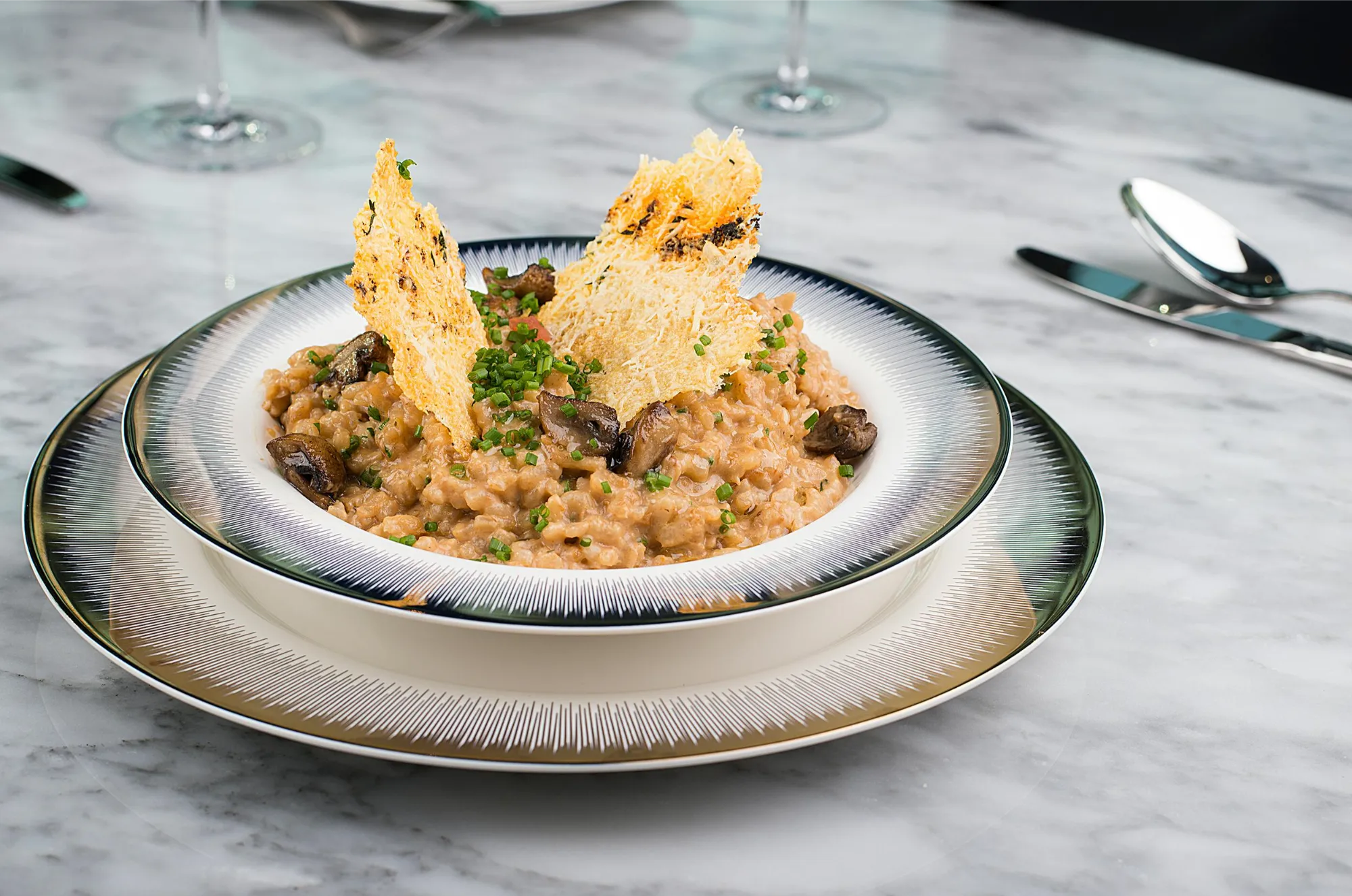
He’d specifically recommended it for mushroom risotto, so that’s exactly what I made.
And honestly? It was one of those meals where you surprise yourself.
The risotto had this beautiful, earthy, slightly fruity undertone that I knew I couldn’t take full credit for.
My partner took one bite, paused, and said “what did you do differently?” He went back for seconds before I’d even finished my first bowl.
That one meal did more for my confidence than any recipe I’d read.
If Joubert’s first recommendation could turn an ordinary weeknight risotto into something my partner was raving about, I felt genuinely ready to take on Easter weekend with the family.
What to cook: Mushroom risotto, braised chicken thighs, pan-seared duck breast with red wine jus, pork tenderloin with cherry reduction, veal with herb sauce.
Check out my guide on the best spices to use for South African cuisines.
2. Cabernet Sauvignon
Best for: Beef, lamb, beef bourguignon, rich braises, pan sauces for red meat
This is the one I turned to that Easter.
I’d decided to do a slow-braised lamb shoulder, something I’d never attempted at that scale before, and on Joubert’s advice, I picked up a bottle of Nederburg Winemaster’s Reserve Cab Sav.
I added it early in the braise, let everything cook low and slow for about three hours.
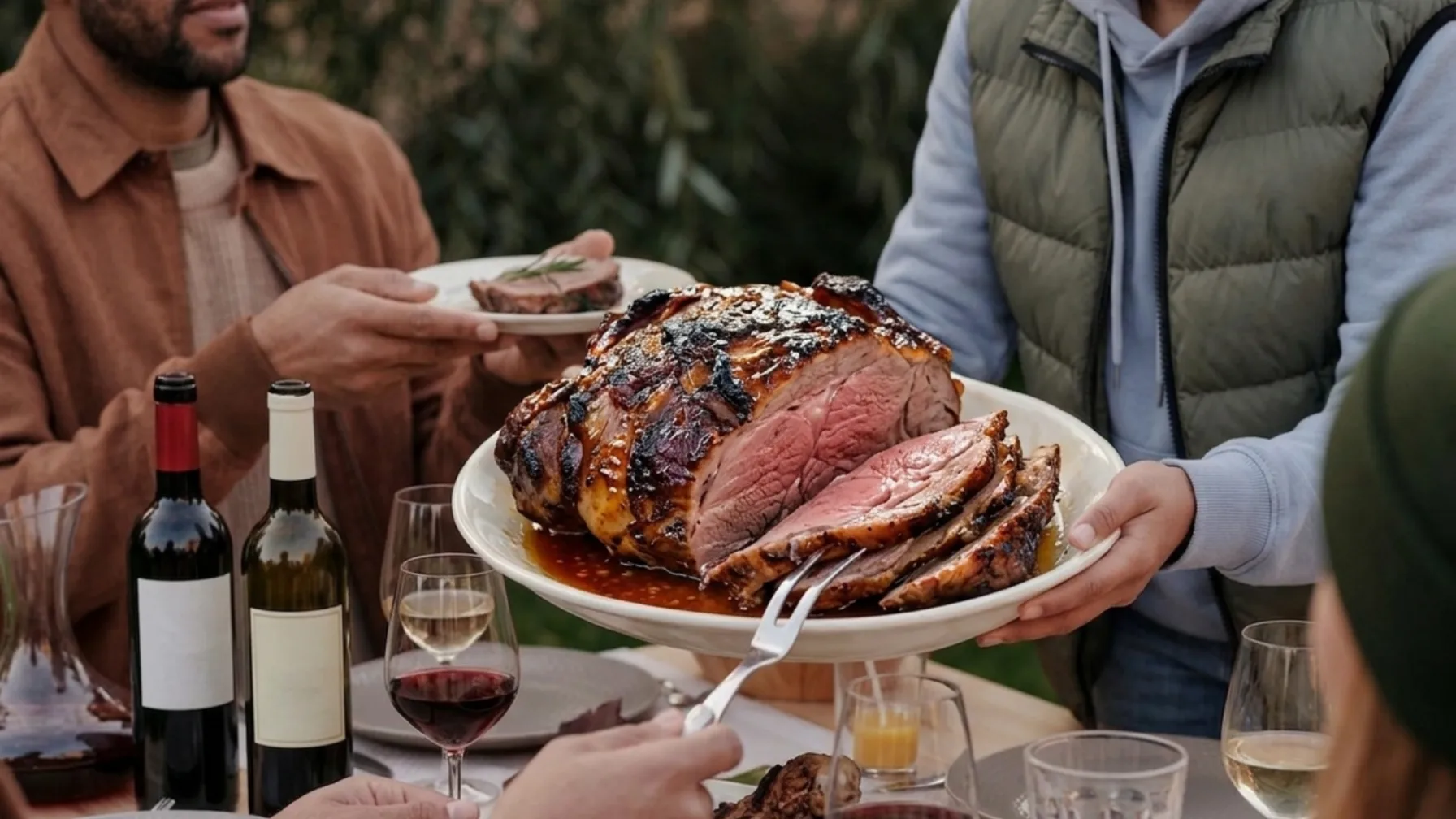
When we sat down to enjoy our Easter meal, everyone was saying the food tasted like a restaurant meal.
The wine had completely melted into the dish. It had a deep, savory, slightly smoky richness that coated every bite.
I ended up sharing the bottle recommendation with three different family members that same afternoon.
What to cook: Beef bourguignon, braised lamb shoulder, red wine and rosemary lamb chops, Chateaubriand, slow-cooked oxtail.
Read my piece on the best pork dishes to try.
3. Merlot
Best for: Chicken, turkey, duck, vegetables, Bolognese, pan sauces
If I’m being honest, this is the one I reach for most. More than the Pinot Noir, and more than the Cab Sav.
Merlot has quietly become my most-used cooking wine, and once you understand why, it makes complete sense.
The reason is simple: I cook a lot of different things throughout the week.
One evening it’s a chicken dish, the next it’s a Bolognese, the weekend might call for something with duck or vegetables.
I needed a wine that could move across all of those without me having to think too hard about whether it was the right call.
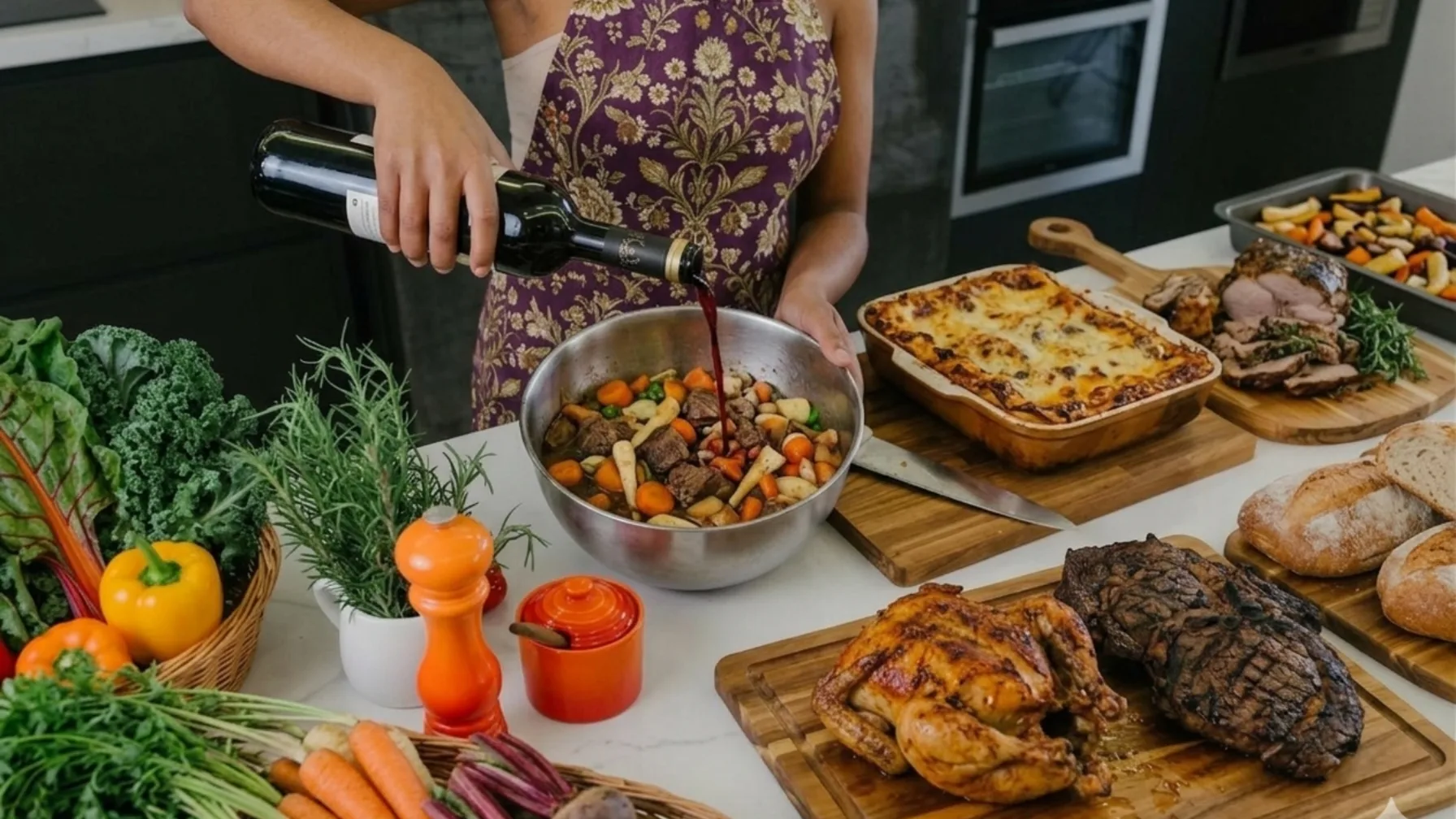
Merlot is that wine. It doesn’t have the over-the-top boldness of a Cab Sav or the delicate elegance of a Pinot Noir, and that’s precisely the point.
That middle-ground character is what makes it so endlessly useful in the kitchen. It plays well with almost everything.
It comes in two styles worth knowing. Lighter, fruitier Merlots (think plum, raspberry, light herbs) are brilliant with poultry, vegetables, and pork.
Fuller, jammier styles with more body work beautifully with beef, lamb, and duck.
Either way, because of its relatively low tannins, it produces smooth, round pan sauces without any bitterness. That alone is reason enough to keep a bottle on the shelf.
Merlot also shines in Bolognese. Its fruit-forward profile adds sweetness and depth to tomato-based meat sauces without the sharpness you’d get from a higher-acid wine.
I’ve made Bolognese with other wines and come back to Merlot every single time.
What to cook: Chicken cacciatore, turkey or duck pan sauce, Bolognese, mushroom and vegetable stew, red wine strawberries.
4. Malbec
Best for: Meat sauces, slow braises, ragù, anything rich and slow-cooked
This one came to me through a happy accident mixed with a timely scroll through social media.
I’d been wanting to try something new in the kitchen. I’d been rotating between Pinot Noir, Cab Sav, and Merlot for a while and was curious whether there was something I was missing.
A post came up on my feed recommending Malbec specifically for slow-cooked meat sauces, with a few people in the comments swearing by it for ragù.
I filed it away and the next time I was making a lamb ragù, I reached for a bottle of Alto Malbec instead of my usual Cab Sav.
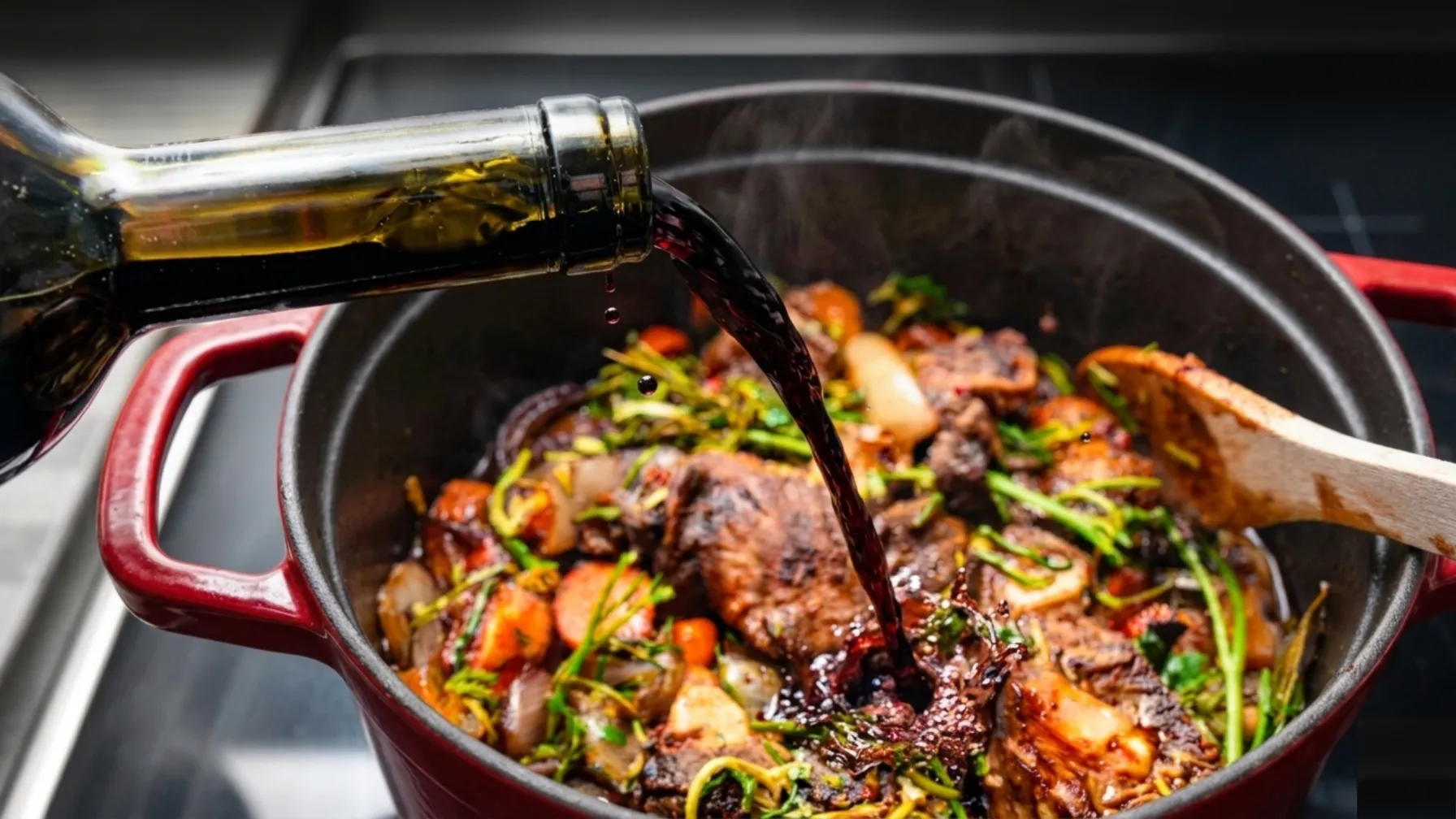
I won’t pretend I wasn’t nervous about the swap mid-recipe; there’s always that moment where you second-guess yourself.
But what came out of that pot genuinely stopped me. Richer, glossier, and deeper than any ragù I’d made before.
The kind of sauce that makes you want to just stand over the stove with a spoon. I’ve never gone back to Cab Sav for that particular dish.
What to cook: Lamb or beef ragù, slow-braised short ribs, rich meat Bolognese, Argentine-style braised beef, red wine and black pepper sauce.
If you are looking for affordable cooking oil options, check out my suggestions.
5. Port Wine
Best for: Desserts, glazes, sweet sauces, wine-poached fruit, sweet-savory proteins
I’ll be upfront, I don’t make desserts every day. During the week, there’s not enough time or energy after a long day at work to cooking a full meal and think about dessert.
But on weekends, when the pace slows down, and I actually have room to enjoy the process, dessert becomes part of the plan.
And when it does, this is the wine I reach for without thinking twice.

Port has become my weekend dessert companion. There’s something about knowing I have a few extra hours on a Saturday afternoon that makes me want to do it properly.
Poach some pears, put together a chocolate cake, or pull off a slow reduction that I’d never attempt on a Tuesday evening.
It sits in a different category from everything else on this list. It’s a fortified wine made in the Douro Valley in Northern Portugal, meaning a distilled spirit, usually brandy, is added during winemaking.
This gives it a higher alcohol content and a noticeable sweetness that makes it unsuitable for savory cooking in large quantities. But used correctly, it’s extraordinary.
Port also works in small amounts in savory cooking, particularly with pork or duck, where a touch of sweetness in the sauce complements the richness of the meat. But for me, the weekend dessert is where it belongs.
What to cook: Wine-poached pears, Port and cherry reduction for duck, chocolate cake with Port glaze, cranberry and Port sauce, pork chops with Port and fig reduction.
If you do not know where to get the best red wines for cooking, check out Port2Port Wine.
Smart Tips for Cooking With Wine
a) Match the weight of the wine to the dish. Light wine for delicate dishes. Full-bodied wine for heavy dishes. When in doubt, go medium.
b) Add wine early, not at the end. Wine needs time to cook. Add it early enough that the alcohol has time to fully evaporate and the flavors mellow and integrate. Raw wine flavor in a finished dish is never pleasant.
c) Reduce it properly. Don’t rush the reduction. Let the wine simmer until it’s lost its sharp, raw edge before adding other liquids. You’ll know it’s ready when the harsh smell softens, and it actually smells good.
d) Taste as you go. What tastes too tannic in the glass becomes rich and mellow in a long braise. Trust the process but keep tasting.
What to Do With Leftover Wine
If you’ve got wine left over after cooking, don’t let it go to waste.
Freeze it in ice cube trays, transfer the frozen cubes to a zip-lock bag, and drop them straight into the pan next time a recipe calls for half a cup (they keep for up to three months).
If you cook with wine infrequently, canned wine is a smart and affordable buy that saves you from three-quarters of a bottle going bad on your counter.
And if you want something ready to go at any time, reduce your leftover red wine with a knob of butter, garlic, and fresh thyme, jar it up, and keep it in the fridge for up to a week as a quick pan sauce base.
Now I’d love to hear from you. Drop a comment below and let me know which of these wines you’ve tried in your own cooking, which one has become your go-to, and if there’s a red wine you love cooking with that I haven’t mentioned here, tell me about it!
I’m always looking for something new to try in the kitchen.