
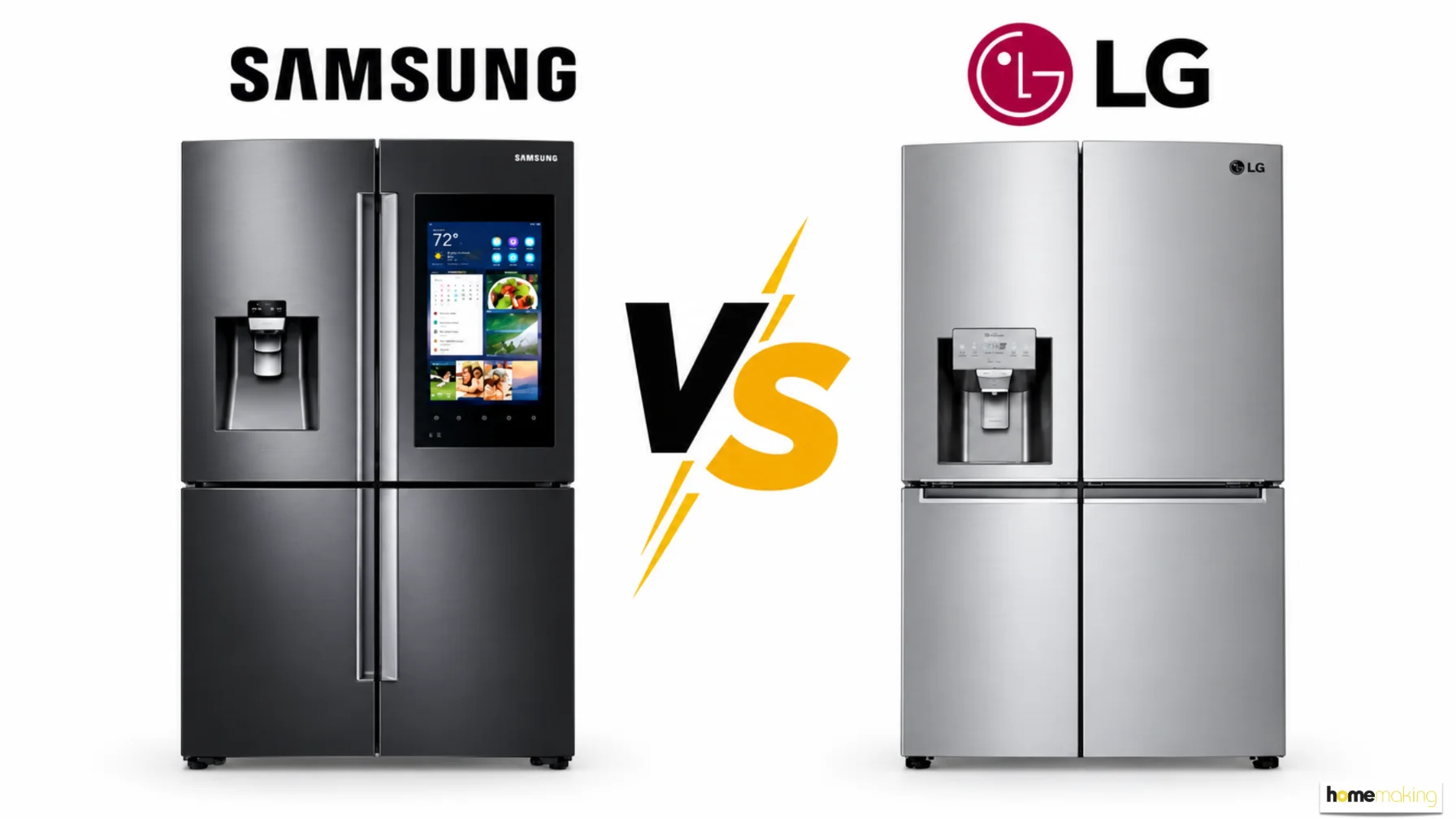
Choosing between a Samsung vs LG fridge? I compared warranty terms, published lawsuits and settlements, and repair-industry reports to see which brand lasts longer and what each costs to fix. Here’s the short version, then the detail.
Quick Answer: Samsung or LG?
Neither brand is clearly more reliable than the other. Both typically give you around 10 to 13 years of use, and both use similar inverter compressor technology.
The difference is in how they tend to fail:
- LG tends to last a little longer and needs fewer repairs early on, but it carries one big-ticket risk: the linear compressor, which has been the subject of lawsuits in the United States.
- Samsung tends to have more small, cheaper faults (mainly ice makers, fans and door wiring), but fewer huge bills.
My verdict: Choose LG if you want fewer repair events and plan to keep the fridge a long time. Choose Samsung if you want its smart touchscreen features and you’re comfortable with the odd small repair. In both cases, buy a recent model rather than an old one on clearance.
Samsung vs LG at a Glance
| Factor | Samsung | LG |
|---|---|---|
| Typical lifespan | About 10–12 years | About 11–13 years |
| Compressor | Digital Inverter | Linear Inverter |
| Compressor warranty | 10 years | 10 years (parts) |
| Most common problem | Ice maker and fan faults | Linear compressor failure |
| Typical small repair | About R3,600–R6,900 | About R3,600–R8,500 |
| Compressor replacement | Less common | About R14,000–R19,800 |
| Ice maker design | Inside the fridge compartment (more problems reported) | In the door (better reported) |
| Smart features | Family Hub touchscreen | InstaView and ThinQ app |
| Do-it-yourself repair | Moderate | Harder (sealed compressor system) |
Note: Repair costs are converted from US estimates at roughly R16.50 per US$1 and rounded. South African labour and call-out rates differ, so always get a local quote. Lifespans are typical ranges, not guarantees.
Samsung Fridge: What to Watch For
a) The ice maker problem
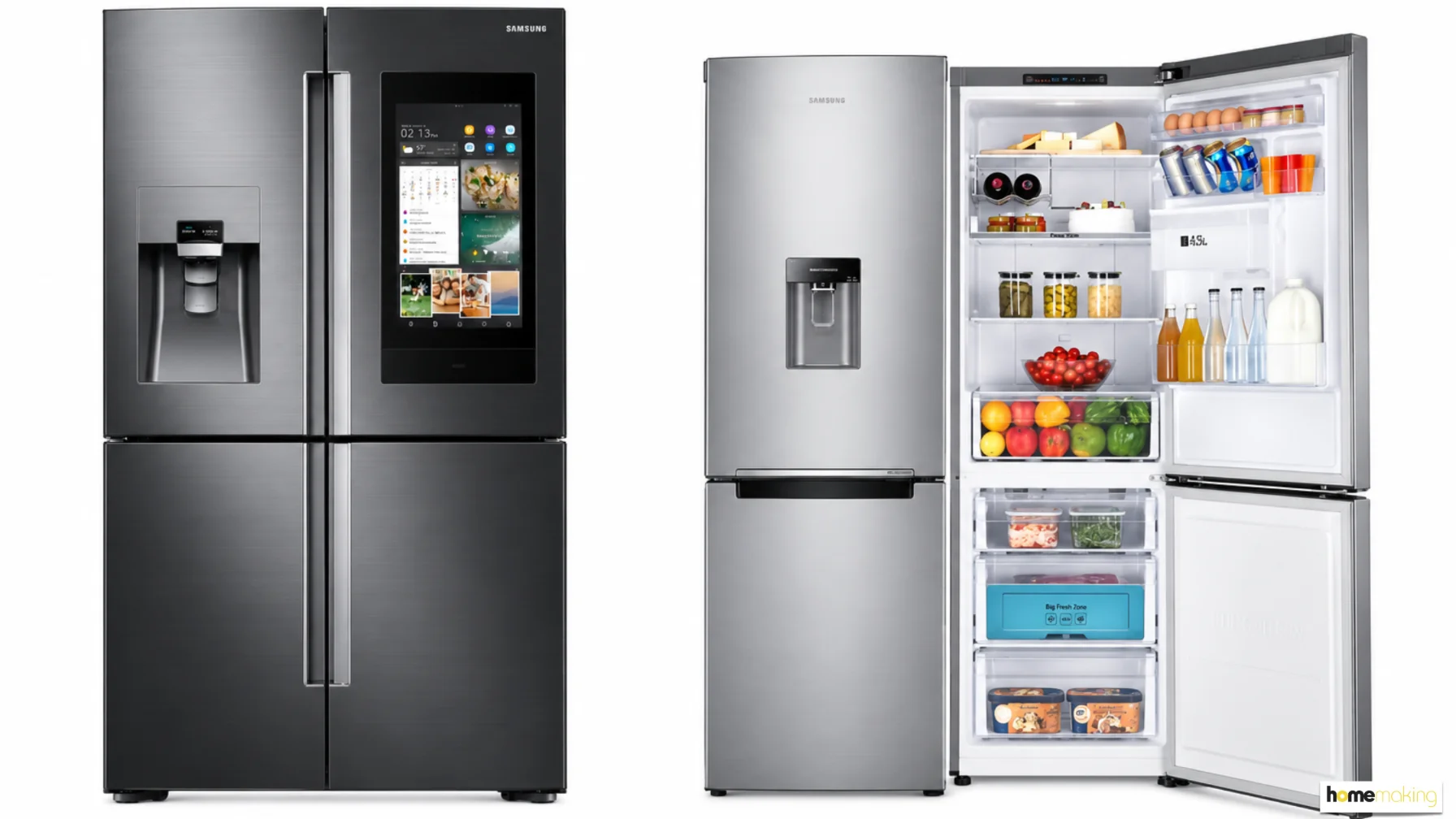
The most widely reported Samsung complaint is the ice maker, especially on French-door models. Owners describe ice makers that freeze over, leak water and produce slushy or hollow ice.
A US class-action lawsuit over the problem was filed in 2017. It never became a full class settlement: the case ended with Samsung settling only with the consumers already involved.
Why does it happen? On many French-door models, the ice maker sits inside the fresh-food compartment, a warm and humid space. Frost builds up, the small fan struggles, and the ice maker stops working properly.
If you’re buying a French-door Samsung, older models are the ones to be cautious about. Newer models are reported to have improved designs, but check recent owner reviews for the exact model you’re considering.
Samsung has said that customer satisfaction is a priority and that it often works with customers on repairs, replacements and refunds.
b) Twin Cooling Plus: great idea, more parts
Samsung’s Twin Cooling Plus system uses separate cooling for the fridge and the freezer. The upside is that food stays fresher because the fridge air doesn’t dry out as quickly.
The downside is that two cooling systems mean two sets of fans and sensors, and more small parts that can eventually fail.
c) Door display and wiring faults
Samsung’s door-mounted displays, dispensers and alarms are connected through wiring that runs through the door hinge. Over years of opening and closing, those wires can wear out.
If you buy a Samsung with a door display, set aside roughly R3,600–R5,300 for this possible repair somewhere in years 6 to 9.
LG Fridge: What to Watch For
LG’s pattern is the reverse of Samsung’s. The small parts tend to hold up well, and the main thing to understand is the linear compressor, which has drawn more scrutiny than any other LG part.
a) The linear compressor
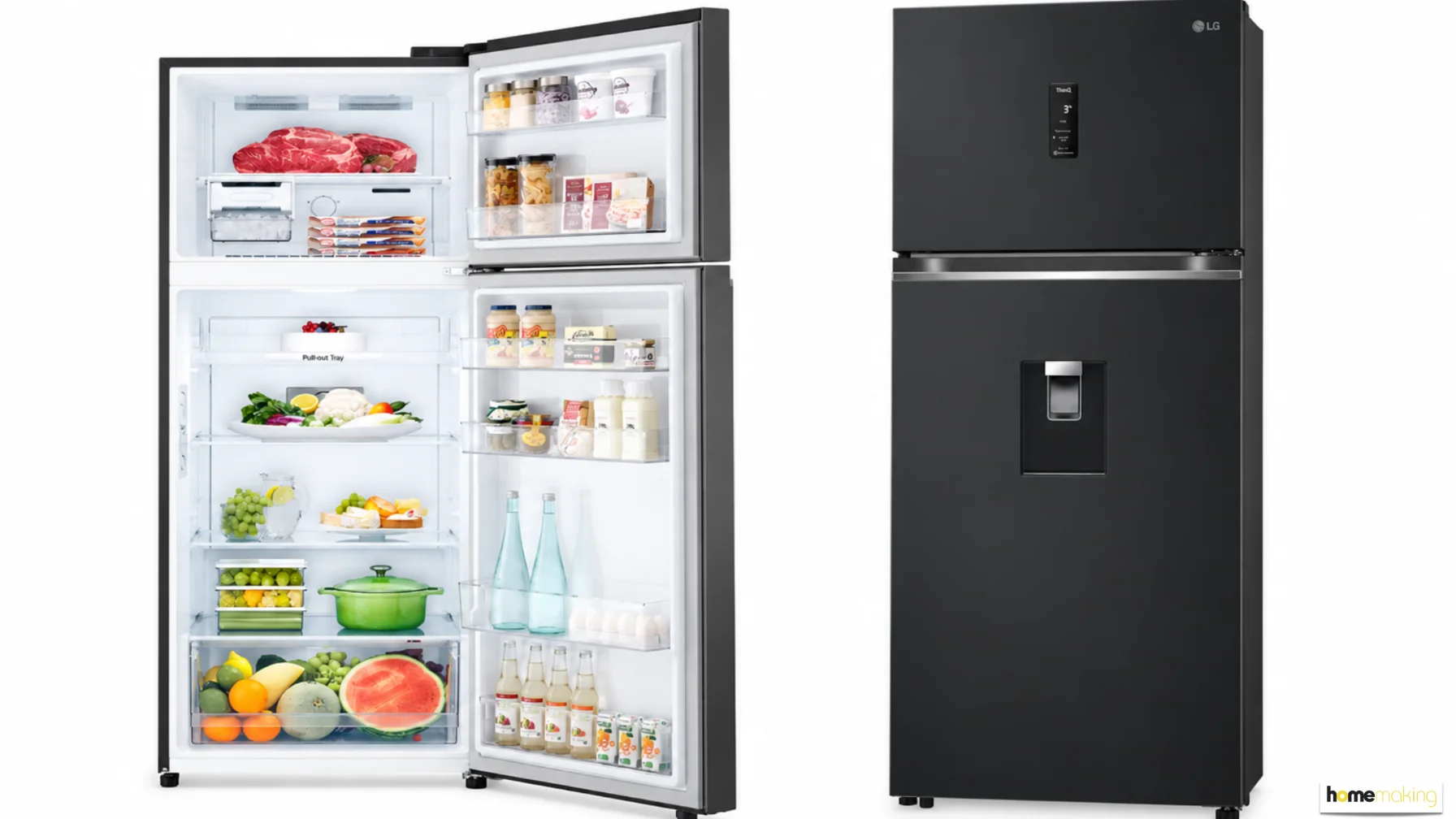
The compressor is the “heart” of your fridge: it pumps the refrigerant that keeps everything cold. LG’s linear compressor is designed to be quieter and more energy efficient, and LG offers a 10-year warranty on it.
The trouble is that a number of owners in the United States reported compressor failures well before the 10-year mark.
LG settled a class-action lawsuit in 2020 covering select refrigerators from the 2014–2017 period, and the settlement stated that LG denied any defect.
A separate lawsuit over fridges bought after 2018 followed. When the compressor fails, the fridge stops cooling completely.
b) Check the labour cover
This is the part many owners miss. LG’s compressor warranty covers the part for 10 years, but not necessarily the labour to install it.
In one reported US case, an owner whose compressor was replaced under warranty still paid the equivalent of several thousand Rand for labour.
In Rand terms, expect to budget around R7,000–R10,000 for the labour on a compressor replacement if it isn’t covered. The full job, if you had to pay for everything, could run from about R14,000 to R19,800.
Before you buy: Ask the retailer for the exact warranty terms in South Africa in writing, and ask specifically whether labour is covered on the compressor.
c) InstaView panel and door light faults
LG’s InstaView feature (the glass panel you knock on to see inside) adds a couple of extra things that can go wrong, such as the panel light and the knock sensor. These are less common, and repairs generally cost about R3,300–R5,800.
d) The ice maker
LG puts its ice maker at the top of the door rather than inside the fridge compartment, which keeps it colder and drier. Reports suggest it fails less often than Samsung’s design, but it’s not perfect. The usual faults are in the small motors.
What Each Brand Does Well
It’s worth saying that both Samsung and LG fridges make capable fridges, and plenty of owners get many trouble-free years from either one.
- Samsung: Twin Cooling Plus is designed to keep fridge air more humid so produce stays fresher, and Family Hub is one of the most ambitious smart fridge screens on the market.
- LG: The linear compressor is designed to be quieter and more energy efficient than conventional compressors, and the in-door ice maker is generally reported to cope better than Samsung’s older design.
Which Should You Buy?
Choose LG if:
- You plan to keep the fridge for 10 years or more.
- You prefer fewer repairs, even if one could be expensive.
- You’re buying a recent model and a basic feature set.
- Ice and water from the door are important to you.
Choose Samsung if:
- You want the Family Hub touchscreen and smart features.
- You’re buying a recent model.
- You’re happy to handle the occasional small repair.
Consider another brand if:
You want maximum reliability and don’t need a through-the-door ice and water dispenser. Bosch, KitchenAid and GE Profile are often recommended for this. Check which of these are actually sold and serviced in South Africa before you fall in love with one.
Smart Fridge Features Need Good Wi-Fi
This section and the next contain affiliate links. I may earn a small commission if you buy through them, at no extra cost to you.
Samsung’s Family Hub and LG’s ThinQ app both rely on your home Wi-Fi.
If the signal in your kitchen is weak, features like remote monitoring and door alerts will keep dropping out, and that’s one of the most common reasons people say a “smart” fridge feels useless.
Before you pay extra for smart features, check your signal in the kitchen. If it’s patchy, a better router or Wi-Fi extender often fixes it, and it’s cheaper than blaming the fridge. Huawei’s South Africa offers page is worth a look to see what’s currently on promotion.
Small Add-Ons That Help Any Fridge Last Longer
Whichever brand you choose, a few cheap habits and accessories protect your fridge and your food:
- A fridge and freezer thermometer. Your fridge should sit at about 4°C or below, and the freezer at around -18°C. A cheap thermometer tells you quickly if something is going wrong, often before the food spoils.
- A surge protector or plug-in power guard. South African power is unpredictable, and surges and sudden restarts are hard on the electronic boards inside modern fridges. Choose a reputable, certified product, not the cheapest one.
- Storage bins and organisers. These stop you overpacking, because blocked air vents make the compressor work harder.
You’ll find all of these on AliExpress at a fraction of the price you’d pay in store. Just check seller ratings and delivery times, and for anything electrical, look for proper safety certification.
What I wouldn’t buy there: compressors, control boards and other major replacement parts. Those should come from the brand’s authorised service network, so the repair keeps its warranty and fits properly.
Is It Worth Repairing? A Simple Rule
When your fridge breaks, don’t decide in a panic. Use this simple check:
- How old is it? Under about 8 years, small repairs are almost always worth doing.
- What will it cost? If the repair is more than half the price of a comparable new fridge, lean towards replacing.
- Is it still under warranty? Check parts and labour separately.
For example, a fridge that cost around R25,000 and has 4 years of useful life left isn’t a great candidate for a R17,000 compressor job. A R4,500 ice maker repair on the same fridge, on the other hand, usually makes sense.
Know your rights in South Africa
If your new fridge is faulty, the Consumer Protection Act gives you rights, including a limited window to ask for a repair, replacement or refund for defective goods.
The details matter, so check them with the National Consumer Commission or the retailer before you pay for repairs yourself.
Load Shedding and Your Fridge
Power cuts are part of life here, so it’s worth knowing how to protect your food and your fridge.
- Keep the doors closed. Food safety guidance (for example from the US FDA) says a closed fridge keeps food safe for about four hours, and a full freezer holds its temperature for roughly 48 hours, or about 24 hours if it’s half full.
- Group food together in the freezer so it stays colder for longer.
- Check your manual about waiting a few minutes before the fridge restarts after a power cut. Many manufacturers recommend this to protect the compressor.
- Use a surge protector where it’s safe and appropriate for your fridge.
Does the Type of Fridge Matter?
Yes. Most of the reliability complaints above relate to French-door models, which are the most feature-packed and therefore have the most parts to fail.
- Side-by-side: Often more reliable than French-door because the ice maker sits in the freezer.
- Counter-depth: Similar reliability to standard depth, just with less capacity.
- Top-freezer: Usually the simplest and longest-lasting. Fewer features means fewer things to break.
If durability matters more to you than a fancy dispenser, a top-freezer or side-by-side is often the smarter buy.
My Recommendation
For most South African households, I’d lean towards a recent LG model with a basic feature set. The ice maker design is better reported, and a recent model avoids the older compressor concerns. Make sure you’ve got the labour warranty in writing.
If you love smart features and want Family Hub, a recent Samsung is a good choice, but budget roughly R6,600–R8,300 for a possible service call in years 8 or 9.
Whichever you pick, check the model number, ask about warranty terms in writing, and keep your receipt somewhere safe.
Samsung vs LG Refrigerator: FAQs
Which brand has fewer repairs, Samsung or LG?
LG tends to need fewer repairs overall, but its biggest possible repair (the compressor) costs much more than Samsung’s typical faults.
How long does a Samsung or LG fridge last?
Roughly 10 to 13 years with normal use. Simpler models like top-freezers often last longer.
Is the LG linear compressor still a problem?
It has been the subject of lawsuits in the US, and LG denies a defect. Newer models are reported to be better, but it’s still smart to check the warranty terms and ask about labour cover.
Are Samsung ice makers fixed in newer models?
Samsung is reported to have improved the design in newer French-door models, but check recent owner reviews for the specific model you’re buying.
Is it worth repairing an 8-year-old fridge?
Small repairs, yes. A major repair like a compressor replacement is a harder call and usually depends on the price of a new fridge.
How I Researched This
I compared manufacturer warranty terms, news reports on published lawsuits and settlements, and repair-industry guides on common faults and typical repair costs.
Repair prices are based on US estimates converted to Rand at roughly R16.50 per US$1, so treat them as a guide and get a local quote. Lawsuits describe allegations, and a settlement doesn’t mean a company admitted fault.
I haven’t tested these fridges myself, and this guide isn’t a substitute for the manufacturer’s current warranty terms. If you spot something that’s out of date or inaccurate, let me know and I’ll update it.
Last updated: October 2026