
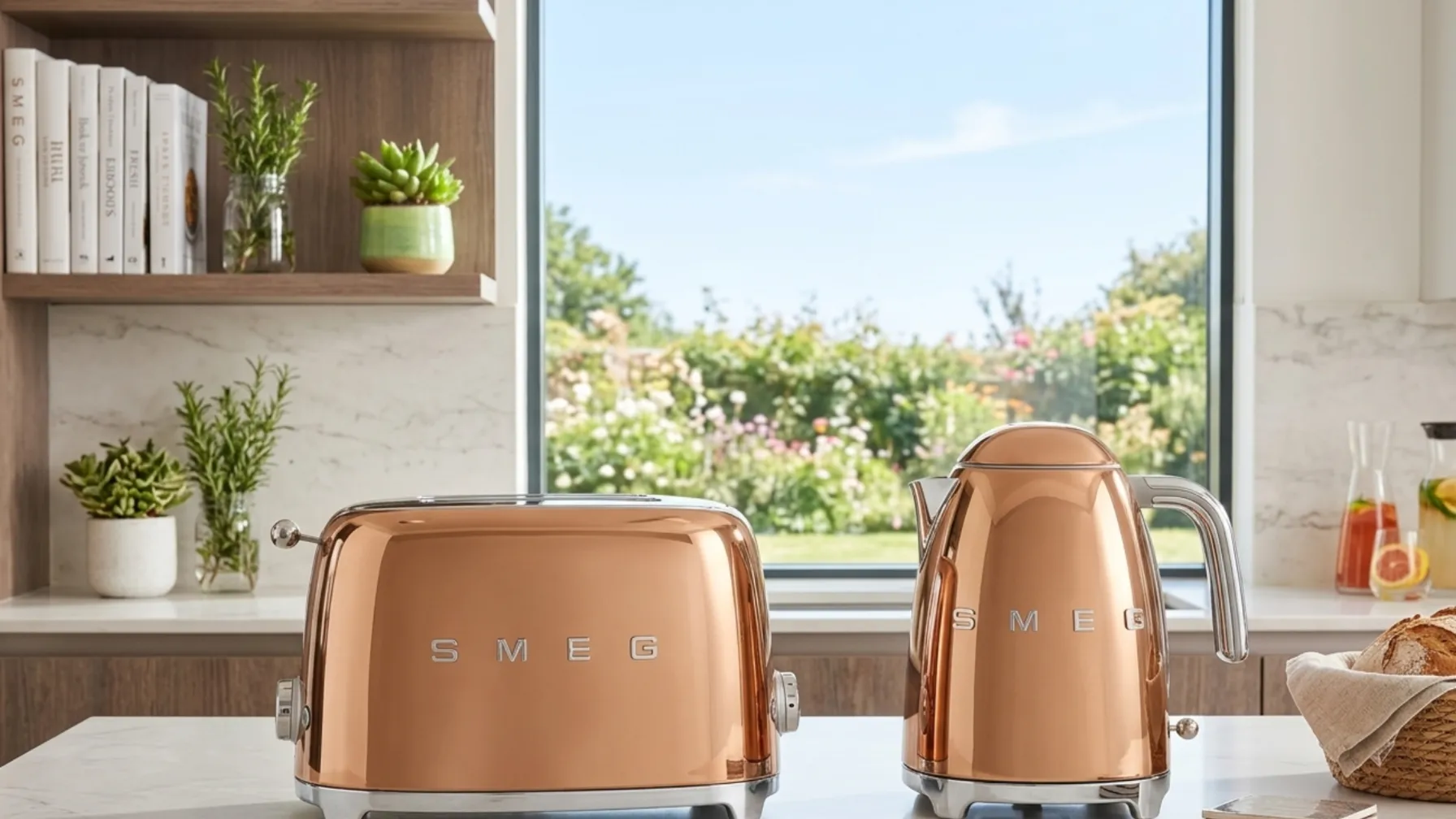
Smeg kettles are expensive because they are premium appliances.
They use high-quality, durable metal and stainless-steel finishes, Italian design, and that distinctive retro styling that turns a simple kettle into a kitchen statement piece.
You’re not just paying for something that boils water, you’re investing in build quality, thoughtful features, and long-term aesthetics.
But are Smeg appliances worth it? Let’s walk through this together so you can decide for yourself.
Which country is Smeg made in?
Smeg is a proudly Italian home appliance manufacturer based in Guastalla, near Reggio Emilia, in the northern Italian region of Emilia-Romagna.
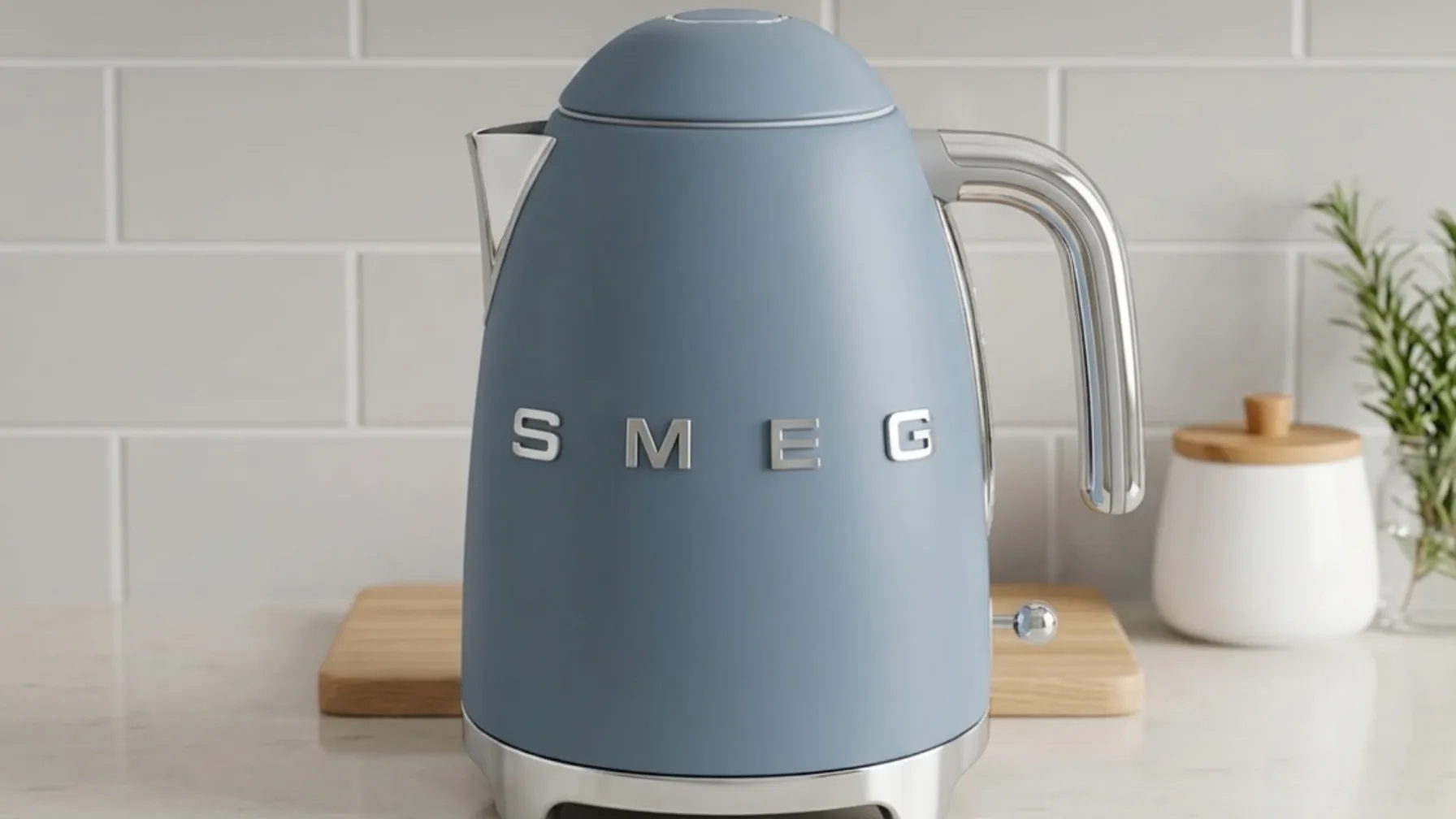
The company was founded in 1948 by Vittorio Bertazzoni as an enamelling and metalworking business, hence the name SMEG (Smalterie Metallurgiche Emiliane Guastalla).
Many of their products, including larger appliances, are still manufactured in their Italian factories.
This ‘Made in Italy’ focus contributes to higher costs through skilled craftsmanship, quality control, and premium materials.
Smeg has subsidiaries and sales partners worldwide, but the heart remains in Italy.
That heritage shows in the attention to detail you see in every curve and finish.
What is a cheaper alternative to Smeg kettle?
In South Africa, a full-size Smeg retro kettle often runs from around R4,199 upwards at places like Yuppiechef, depending on the model and colour.
Variable temperature versions push closer to R5,399. That’s a big ask for many budgets.
Solid, cheaper options that still perform well:
- Russell Hobbs or similar stainless steel models: Often under R500–R1,000. They boil fast and last reasonably if you don’t mind basic designs.
- Cuisinart or Kenwood options: Around R2,000–R3,000 with better features like temperature control.
- Local or generic rapid-boil kettles: from Makro, Takealot, or MHC World. Great for everyday use without the style premium.
These alternatives get the water hot just as quickly. The main tradeoff is aesthetics and that premium ‘wow’ feel.
If your kitchen is modern-minimalist and you don’t crave retro colour, save the money. But if you want the countertop centerpiece, Smeg delivers.
Pro tip: Check for bundle deals on Smeg kettle and toaster sets. They sometimes offer better value.
Check our article on What To Know About Smeg Appliances South Africa
How much is a mini Smeg kettle?
The Smeg Mini Kettle (KLF05 series, about 0.8L or 3 cups) is perfect for smaller households, offices, or when you don’t want to boil a full 1.7L every time.
In international markets, expect prices around £105–£120 (or roughly $150–$180 USD equivalent).
In South Africa, factor in import costs, and you’ll likely see it higher. Check current listings on Yuppiechef.
It keeps the same retro charm in a compact footprint with the same quality stainless steel interior.
Great if you hate wasting water or energy. Many users love it for single cups of tea or pour-over coffee.
How long do Smeg kettles typically last?
This is where opinions split. Some owners report 5+ years of daily use with no issues. Others see problems sooner.
I checked Smeg kettle reviews from Reddit, and several users had some comments worth checking. You can check the reviews from Reddit, from where I saw the reviews too.
I also checked Trustpilot reviews on Smeg kettles. I’m going to also provide the link so that you can also check what the users have to say before you make your decision.
With proper care like regular descaling every few months, especially in hard water areas, not overfilling, and gentle handling, many Smeg kettles last 4–7 years.
They’re not always ‘buy it for life’ items at this price point, but they generally outlast basic budget kettles when looked after well.
Are Beko and Smeg the same?
No, they are not the same company. Smeg is an independent Italian. Beko is a Turkish brand under Arçelik/Koç Holding. They are completely separate.
Some Beko models (or rebadged versions) might share similar internal components in certain categories across the industry, but Smeg’s design, aesthetics, and premium positioning set it apart.
Don’t assume they’re twins. Smeg commands the higher price for its unique retro Italian style.
What is special about a Smeg kettle?
Here’s where Smeg shines. It’s not just another kettle.
a) Iconic Design: Glossy powder-coated finishes, retro 1950s curves, and a rainbow of pastel and bold colours. It becomes a stylish countertop centerpiece, not hidden in a cupboard.
b) Variable Temperature Control (on models like KLF04): Choose from 50°C to 100°C. Perfect for green tea (around 80°C), white tea, black tea, or coffee. No more guesswork.
c) Keep Warm Function: Holds your temperature for up to 20 minutes—ideal for a second cup without reboiling.
User-Friendly Details:
- Soft-opening lid to avoid steam splashes.
- Removable limescale filter for easier cleaning.
- Clear water level indicator.
- 360° swivel base.
d) Solid Performance: 1400–1500W (model dependent) for quick, relatively quiet boiling. Stainless steel interiors for durability and taste.
e) Example in action: You want the perfect pour-over coffee at 93°C. Select it, hit go, and the keep-warm keeps it ready. No temperature gun needed.
Read our guide on the 9 Top Appliance brands in South Africa
Are Smeg kitchen appliances worth buying?
It depends on what you value. If design, joy, and a cohesive retro kitchen matter more than raw longevity or lowest price, yes.
If you just need reliable boiling on a budget, plenty of solid alternatives exist.
My honest take: Smeg kettles deliver on beauty and thoughtful features. They make daily rituals feel special. But they’re a luxury purchase. Test one in-store if possible, compare to alternatives, and decide based on your kitchen vibe and budget.
What do you think is worth the splurge for you, or sticking with practical? Drop a comment. I’d love to hear your kitchen stories. Happy brewing!
Check our guide on where to buy your kitchen appliances in South Africa