
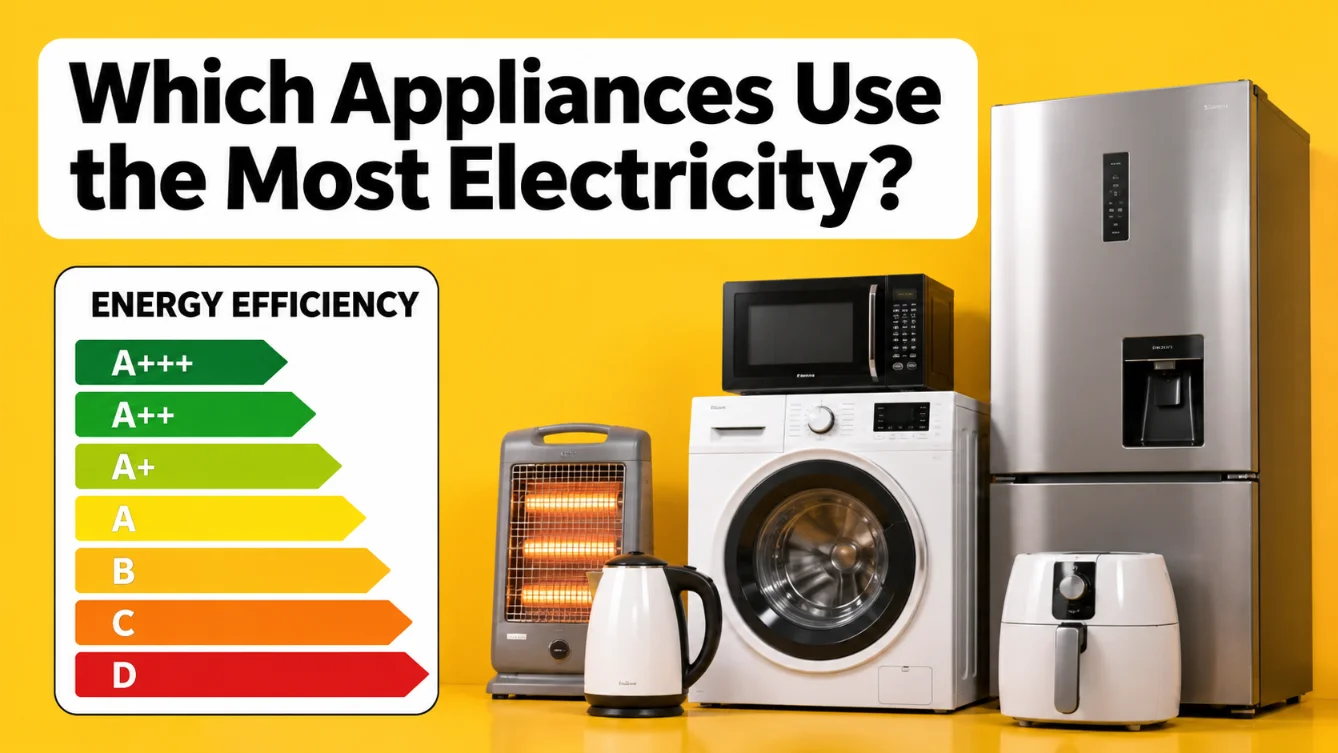
Electric geysers are usually the biggest electricity users in South African homes, followed by heaters, air conditioners, pool pumps, electric stoves and refrigerators.
The exact ranking depends on your household size, appliance efficiency, seasonal weather, electricity tariff and how long each appliance runs.
This guide takes you through which appliances use the most electricity in South Africa, explains typical monthly kWh consumption, and shows practical ways to reduce your electricity bill.
What uses the most electricity in a house in South Africa?
In most South African households, water heating is the largest single electricity expense.
Eskom notes that an electric geyser can consume up to 50% of a household’s electricity, while the South African government also identifies geysers, air conditioners, space heaters and pool pumps as major power consumers.gov+1
However, the appliance with the highest wattage is not always the appliance that uses the most electricity over a month.
A 2,000 W heater may only run for an hour a day, while a 150 W refrigerator runs continuously. Monthly electricity use is determined by this formula:
kWh=1000Appliance wattage×hours used
For example, a 2,000 W heater used for three hours a day consumes 6 kWh daily, or about 180 kWh per month. At R3 per kWh, that is roughly R540 per month.
Appliances that use the most electricity in South Africa
The table below gives practical estimates for common household appliances. Your actual consumption may be higher or lower depending on the appliance’s age, size, energy label, insulation, thermostat setting and usage pattern.
| Rank | Appliance | Typical power draw | Estimated monthly electricity use | Why it uses so much |
|---|---|---|---|---|
| 1 | Electric geyser | 2–3 kW element | 90–270 kWh | Heats and reheats water throughout the day |
| 2 | Electric heater | 1–2 kW | 90–300 kWh in winter | High wattage combined with long winter running hours |
| 3 | Air conditioner | 0.8–3.5 kWh per hour | 36–150+ kWh in summer | Cooling demand, long operating hours and poor insulation |
| 4 | Pool pump | 0.75–1.1 kW | 90–270+ kWh | Often runs for several hours every day |
| 5 | Electric stove and oven | Hob: 1.5–2 kW; oven: about 2–2.5 kWh/hour | 15–60+ kWh | High power draw and frequent cooking |
| 6 | Tumble dryer | About 2–4 kWh per cycle | 6–50+ kWh | Uses electricity to heat air and dry clothing |
| 7 | Fridge and freezer | Low wattage, but continuous operation | About 30–50 kWh | Runs 24 hours a day |
| 8 | Washing machine | Varies by model and cycle | 10–40+ kWh | Hot washes, water heating and spin cycles increase use |
| 9 | Dishwasher | Varies by cycle | 10–35+ kWh | Heating water and drying cycles use substantial energy |
| 10 | Kettle, microwave and iron | High wattage, short use | Usually lower monthly total | Brief but intense electricity draw |
These estimates are useful for planning, but they are not fixed figures. A large old refrigerator, a poorly insulated geyser, a heater used all day, or a pool pump running excessively can use far more electricity than the average.
Nedbank estimates that most full-size modern fridges and freezers use around 2 kWh per day or less, while electric geysers may use 9–15 kWh daily.
1. Electric geyser
For many homes, the electric geyser is the appliance that uses the most electricity in South Africa. It uses a heating element to warm water, then reheats it as the stored water loses heat through the tank and pipes.[gov]
A 150-litre geyser with a 2 kW or 3 kW element can use a significant amount of electricity, especially if it maintains hot water all day.
The problem is not only the element’s wattage; it is the repeated reheating caused by hot-water use, heat loss and an overly high thermostat setting.
How to reduce geyser electricity use
- Set the thermostat to about 60°C rather than leaving it unnecessarily high.
- Install a geyser blanket and insulate exposed hot-water pipes.
- Use a timer or smart geyser controller to avoid heating water when nobody is home.
- Take shorter showers and avoid letting hot water run unnecessarily.
- Repair dripping hot-water taps promptly.
- Consider a heat pump or solar water heater if you are replacing an old geyser.
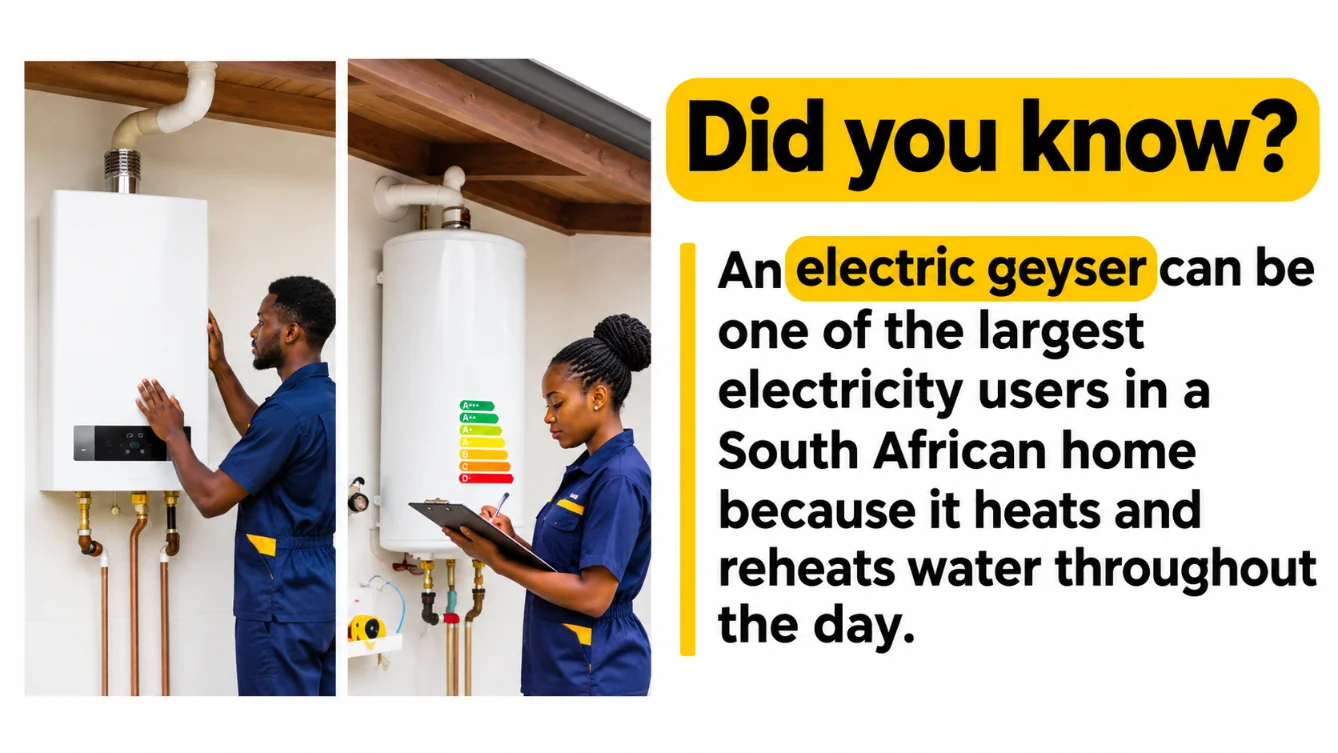
Reducing geyser use is often the fastest way to lower a household electricity bill because the appliance affects such a large share of total consumption.
2. Heaters and air conditioners
Electric heaters, panel heaters, oil heaters and air conditioners can become expensive quickly because they combine high power consumption with long operating periods.
During winter, heaters can rival or exceed a geyser’s monthly electricity use if they run for many hours each day.
Air conditioners are particularly costly in summer when they run for extended periods.
Their consumption rises further when doors and windows are open, filters are dirty, or a room is poorly insulated.
Ways to cut heating and cooling costs
- Heat or cool only the room you are using.
- Close doors and windows while heating or cooling.
- Use curtains, ceiling insulation and draught-proofing to retain comfortable temperatures.
- Clean air-conditioner filters regularly.
- Set air conditioners to a moderate temperature rather than extreme cooling.
- Use an electric blanket for short periods instead of heating an entire bedroom.
- Choose a fan where appropriate, as it generally uses less electricity than an air conditioner.
3. Pool pumps
Pool pumps are easy to overlook because they are outdoors and often run automatically.
However, a pump that operates for six to eight hours daily can consume a large amount of electricity over a month.
The South African government specifically lists pool pumps among the biggest household power consumers.
How to reduce pool pump electricity use
- Run the pump only for the time needed to keep the pool clean.
- Use a timer rather than leaving it on continuously.
- Clean the filter and skimmer baskets regularly.
- Consider a variable-speed pool pump if replacement is due.
- Avoid running the pump during peak electricity periods where possible.
4. Electric stoves, ovens and kitchen appliances
Kitchen appliances can use a lot of electricity, but their monthly impact depends heavily on cooking habits.
An electric stove plate or oven draws high power, but it may not use as much electricity monthly as a refrigerator that runs continuously.
A kettle, microwave, toaster and iron have high wattage, but they are usually used for short periods. They can still add up if used several times daily, especially in larger households.
Kitchen electricity-saving tips
- Match the pot size to the stove plate.
- Use lids when boiling water or cooking.
- Cook several dishes at once in the oven.
- Use a microwave, air fryer, pressure cooker or induction plate for smaller meals.
- Avoid opening the oven door while food is cooking.
- Boil only the water you need in the kettle.
- Run dishwashers and washing machines only when full.
5. Refrigerators and freezers
Refrigerators and freezers do not have the highest wattage, but they are among the most consistent electricity users because they operate day and night.
Their total monthly consumption can be significant, particularly if the appliance is old, overfilled, poorly sealed or placed near a heat source.
How to reduce fridge and freezer electricity use
- Keep the door closed and avoid leaving it open for long periods.
- Do not place hot food directly inside the fridge.
- Ensure door seals close properly.
- Keep the appliance away from ovens, direct sunlight and heaters.
- Avoid setting the temperature colder than necessary.
- Replace an old, inefficient second fridge if it is no longer needed.
6. Laundry appliances
Washing machines and tumble dryers can use substantial electricity, especially when they heat water or dry clothes.
Tumble dryers are among the more energy-intensive laundry appliances because they must heat air to remove moisture from clothing.
Laundry-saving tips
- Wash full loads rather than small, frequent loads.
- Use cold-water cycles where suitable.
- Air-dry laundry whenever possible.
- Clean the tumble dryer lint filter after every cycle.
- Avoid over-drying clothes.
- Use the economy or eco setting where available.
How to calculate your appliance electricity cost
To estimate how much an appliance costs to run, first find its wattage on the label, plug, manual or manufacturer specification.
Then calculate its kWh use and multiply it by your electricity tariff.
For example:
- A 1,500 W heater used for four hours daily uses 6 kWh per day.
- Over 30 days, it uses 180 kWh.
- At R3 per kWh, it costs about R540 per month.
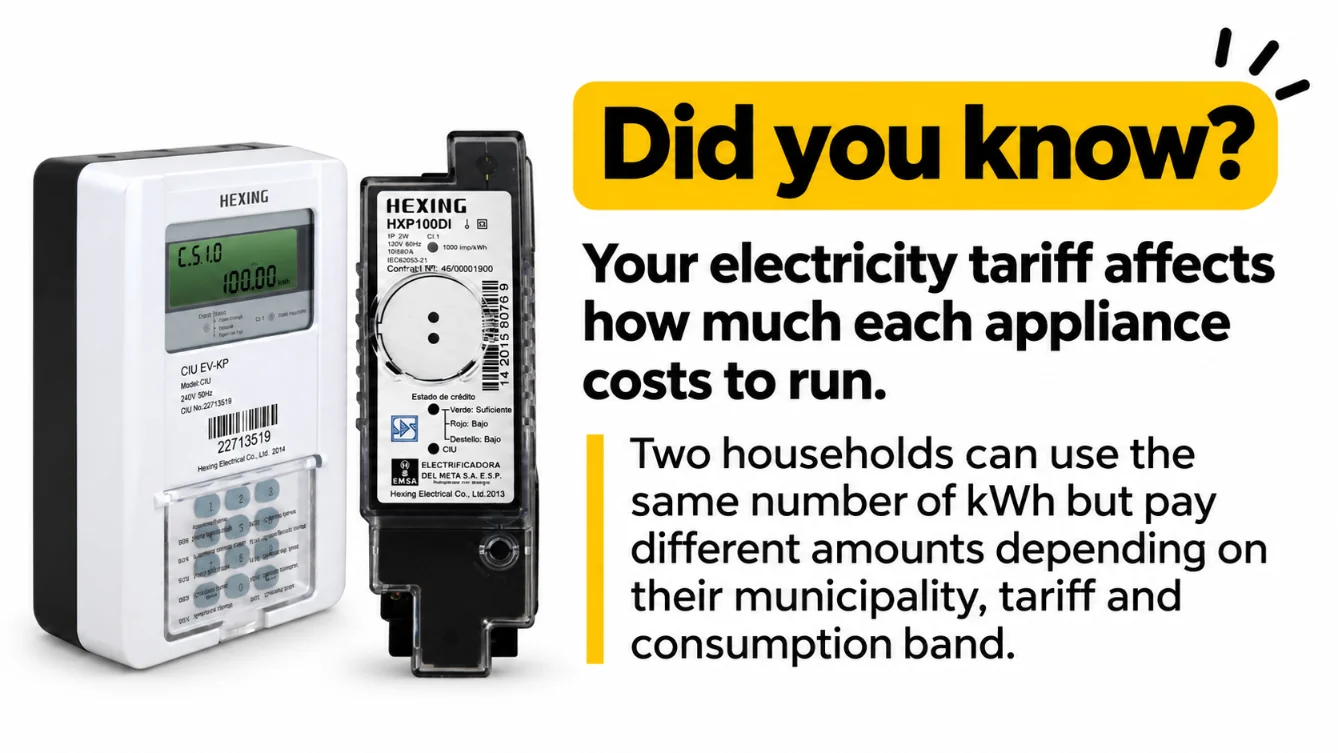
Electricity tariffs vary by municipality, consumption band and whether you use prepaid or postpaid electricity.
You can use Eskom’s residential electricity calculator to estimate how much your household appliances may cost to run.
Eskom’s residential calculator uses an assumed average municipal tariff of R2.40 per kWh, but you should use the rate shown on your own bill or prepaid receipt for a more accurate estimate.
How to reduce your electricity bill in South Africa
The most effective savings usually come from reducing the use of high-consumption appliances rather than switching off small devices.
- Prioritise geyser efficiency: use a timer, insulation and sensible temperature settings.
- Reduce heater and air-conditioner running time.
- Use appliances during off-peak periods where your tariff supports it.
- Replace inefficient appliances only when repair is no longer cost-effective.
- Look for energy-efficient appliances with strong energy labels.
- Monitor usage with a prepaid meter, smart meter or plug-in energy monitor.
- Avoid running several high-wattage appliances unnecessarily at the same time.
Small behavioural changes can make a meaningful difference, but geyser management, heating, cooling and pool-pump scheduling usually offer the biggest savings potential.
What uses the most electricity in a house FAQs
Does a TV use a lot of electricity in South Africa?
Usually, no. A modern LED television uses relatively little electricity compared with a geyser, heater, air conditioner or pool pump. However, a large plasma TV, gaming console, soundbar and decoder left on for many hours can add up over a month. LED TVs generally use less electricity than older plasma models.
Does leaving appliances plugged in use electricity?
Some appliances use a small amount of standby power when switched off but still plugged in. The impact is usually small compared with a geyser, heater or pool pump, but unplugging rarely used devices can still help reduce waste.
Do old appliances use more electricity?
Often, yes. Older appliances may be less efficient than newer models, particularly refrigerators, freezers, geysers and tumble dryers. If an old appliance is costly to run or needs frequent repairs, replacing it with an energy-efficient model may reduce long-term electricity use.
Does load shedding increase electricity usage?
Load shedding itself does not automatically increase electricity use, but power returning after an outage can create a surge of simultaneous demand. Households may also use backup power, recharge devices or run appliances for longer once electricity is restored.
What time of day should I run high-consumption appliances?
Run high-consumption appliances when your tariff is lowest if you are on a time-of-use tariff. If you use a flat prepaid or municipal tariff, the priority is simply to reduce unnecessary running time rather than focusing only on the time of day.
How can I tell if an appliance is energy efficient?
Check the appliance’s energy label, rated wattage, annual kWh consumption and efficiency class. In South Africa, energy labels can help compare appliances, with higher-rated models generally using less electricity for the same task.
Final takeaway
If you want to lower your electricity bill in South Africa, focus first on your geyser, then on heating, cooling, pool pumping, cooking and laundry.
These appliances generally have the greatest impact on monthly electricity consumption, while fridges and freezers matter because they run continuously.